
打架成本警示牌
Proposed US rule barring China science collaboration sparks outcry from US scientists_我的网站

一 |
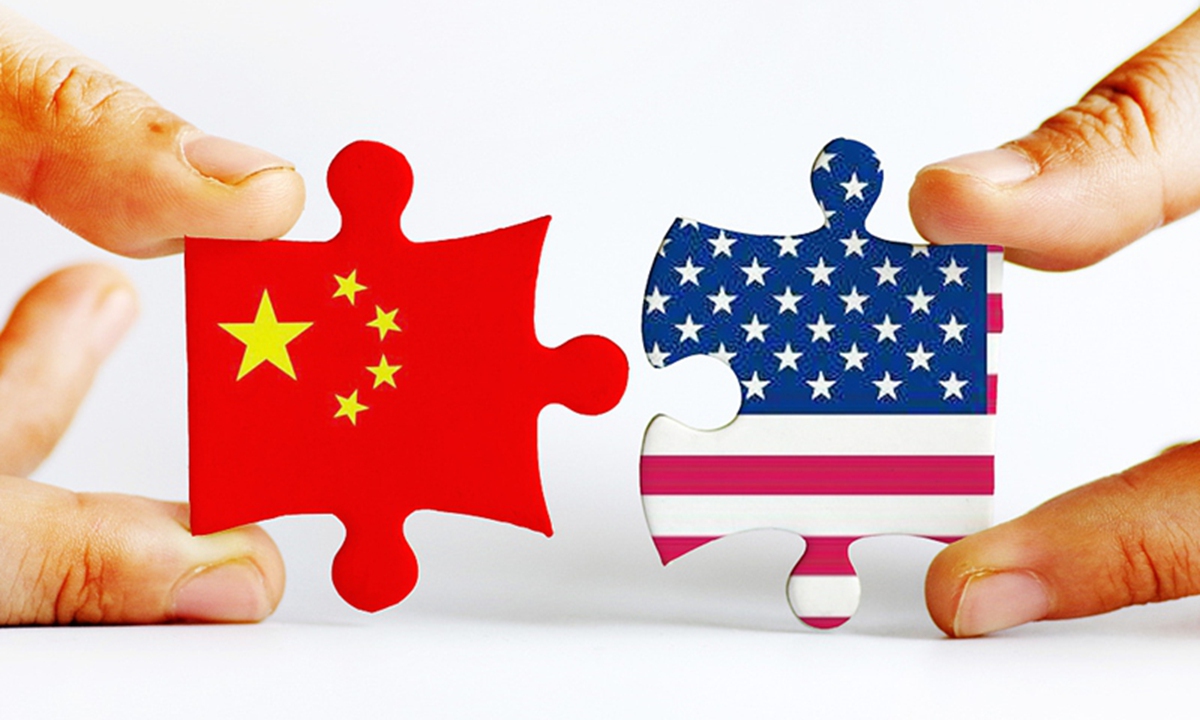
The proposed Office of Management and Budget (OMB) rule, set to take effect in December, would mark one of the biggest overhauls of US science funding in decades, giving political appointees greater authority over grant awards previously guided by scientific peer review and requiring that they "advance the President's policy priorities," according to the Washington Post.
It would also effectively expand the 2011 Wolf Amendment, which bars scientists from using NASA funding for bilateral collaborations with China, to all federal agencies and scientists receiving federal funds, marking the largest break in US-China scientific engagement in decades, the US media outlet reported.
So far, the proposed rule has garnered nearly half a million public comments, many from scientists and leading US science bodies. A Washington Post analysis of 50,000 of those comments found that around 88 percent were negative.
The rule, initially set to take effect in October, was pushed back to December after a bipartisan stopgap funding bill temporarily halted its adoption. Unlike the Wolf Amendment, the rule does not require congressional approval to take effect.
"I do think there are still members of Congress who think we have a monopoly on knowledge. They think we're still in the Cold War Soviet era ... where we were ahead in most areas of science and technology. That is not the case with China. We are no longer the leader in many areas of science," said Tobin Smith, senior vice president for government relations and public policy at the Association for American Universities, which advocates on behalf of leading US research universities, per the Washington Post.
Scientists warn that the rule risks subjecting long-term scientific research to four-year political cycles. "We will not succeed if with every new administration we are ping-ponging back and forth about priorities," the American Association for the Advancement of Science said in a blistering comment, urging the administration to withdraw the rule. "Fast-tracking such profound changes ... hands an easy victory to nations like China," it said, the Washington Post reported.
This reflects a fundamental divide between the US government and the scientific community over how science should develop, Wang Yiwei, a professor at Renmin University of China's School of International Studies, told the Global Times. He noted that politicians tend to believe that suppressing China as a competitor would allow the US to preserve its market dominance and technological edge.
Scientists, however, tend to follow a different logic, as scientific progress depends on openness, exchanges and collaboration. If science and technology are driven solely by competition and private capital, with the ultimate goal of maintaining technological monopolies, this could create greater risks and ultimately undermine US interests as well, Wang said.
The proposed rule change is the latest salvo in a broader battle in Washington over how to respond to China's rise as a scientific superpower. In July, the US National Science Foundation (NSF) also moved to ban collaborations between scientist it funds and many Chinese research institutions and their employees, according to Science magazine.
Liu Shaoshan, director of the Center for Embodied AI at the Shenzhen Institute of Artificial Intelligence and Robotics for Society and a former US-based researcher, told the Global Times in a previous interview that the NSF's new proposed rules created a "talent wall," arguing that restrictions based on nationality, institutional affiliation, and research partnerships could reduce the global talent pool available to the US, weaken its ability to attract leading scientists, and slow scientific innovation.
Liu also said scientific advancement relies not only on discovery but also on the exchange, validation, and dissemination of knowledge.
Wang also said China has built significant strengths through its vast pool of scientists and engineers, complete industrial chains and massive application scenarios, while increasingly moving from application-oriented innovation toward original research. Against this backdrop, US technological blockades and restrictions on cooperation are unlikely to halt China's progress, but could instead isolate American scientists from China's latest research and collaboration opportunities. Such an approach could also prevent the two countries from leveraging their respective strengths and ultimately undermine US competitiveness, Wang said.
。

二 |
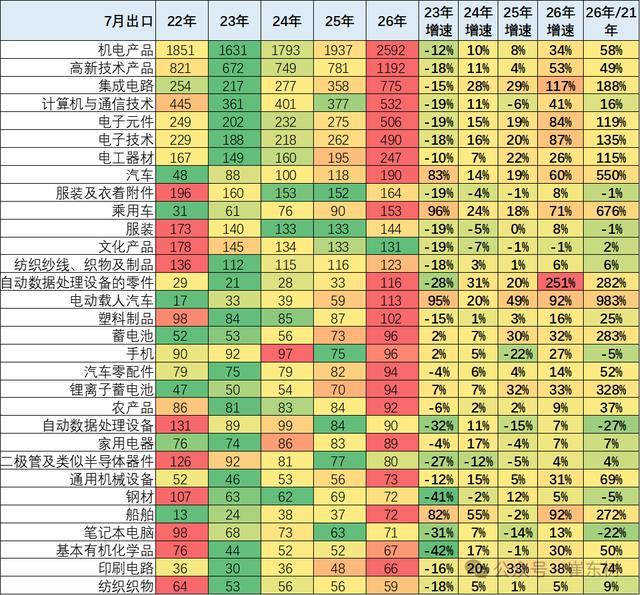
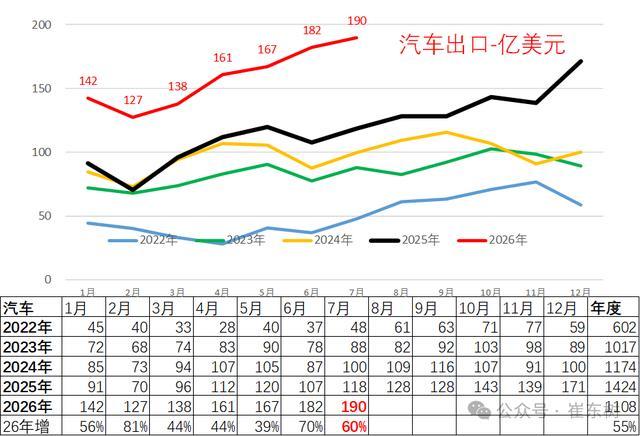
图源:乘联分会秘书长崔东树汽车出口近几年从出口方面表现极其优秀,从 2021 年的 345 亿美元(现汇率约合 2,324.56 亿元人民币)上升到 2024 年的 1,174 亿美元(现汇率约合 7,910.24 亿元人民币),形成了爆发增长态势,而且在 2025 年依旧保持月度小幅的增长特征。4 季度汽车出口暴增,全年达到 1,424 亿美元(现汇率约合 9,594.7 亿元人民币),汽车出口创汇巨大。
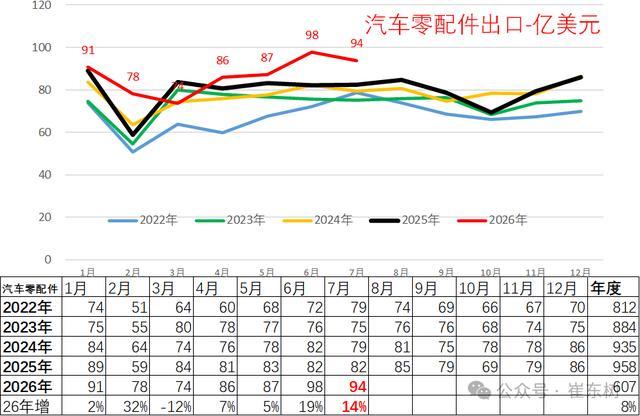
图源:乘联分会秘书长崔东树7 月汽车零部件出口 94 亿美元(现汇率约合 633.36 亿元人民币),同比增长 14%;2026 年 1-7 月达到 607 亿美元(现汇率约合 4,089.88 亿元人民币),同比增长 8%,中国汽车零部件出口压力巨大,要跟着自主整车企业发展,要改变依托欧美的售后体系的特征。汽车零部件与汽车整车是完全两套需求体系,面对完全不同的市场,因此增速差异大。中国自主整车出口基本不去美国市场,中国汽车零部件出口是美国为主要市场。中国汽车零部件很早就实现超高的出口额,今年 1-2 月的出口零部件保持在 80 亿美元(现汇率约合 539.03 亿元人民币)的水平,7 月回升较大,高油价的压力明显。
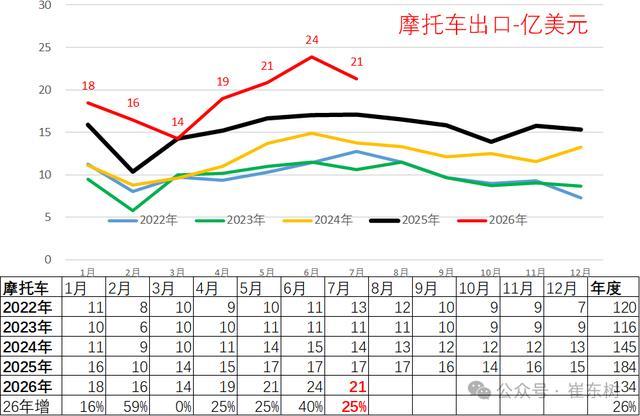
图源:乘联分会秘书长崔东树摩托车出口 2026 年 1-7 月达到 134 亿美元(现汇率约合 902.87 亿元人民币),增 26%;7 月摩托车出口 21 亿美元(现汇率约合 141.49 亿元人民币),同比增 25%,燃油摩托车出口因高油价放缓,电动摩托暴增。由于油价暴涨,摩托出口减速。摩托车与汽车整车是完全两套需求体系,面对完全不同的市场,因此增速差异大。中国汽车整车出口基本不去美国,中国摩托车出口是多元的市场。近几年中国摩托车实现超高的出口额增长,且摩托出口单价表现较好。摩托是汽车学习的榜样,在缺少国内市场支撑下,电动化和充分市场价格竞争培育超强竞争力。
图源:乘联分会秘书长崔东树
Current article:http://03fh.mengruanpianchengji.cyou/yklp/20260826/88737.html
Published on:20:09:00
我的网站相关阅读
- [视频]如果全球的冰都融化了 地球会变成什么样子
- Why Asia Won't Reject Russia's Hydrocarbons or China's Rare Earths Despite US Pressure
- 姆巴佩官宣恋情,女友竟是她
- 日本排放核污染水已三年,22轮累计排放超17万吨
- 开展“世界卫生日”宣传活动
- Kagi上线一键屏蔽付费墙:搜索引擎第一次替用户把门
- 컴투스 신작 MMORPG '제우스' 정식 서비스…양대 앱마켓 1위
- Video: Maharashtra State Chief Eknath Shinde's Wife Plays Drums to Welcome Him Home
- 'कांग्रेस जितना देगी गाली, उतना खिलेगा कमल...', पीएम मोदी पर अभद्र टिप्पणी को लेकर अमित शाह का पलटवार
我的网站最新文章
- China's AI-powered 'flying lifebuoy' joins water rescue toolkit
- 苹果 iOS 16 已支持检测假冒 AirPods,iPhone 弹窗提醒不要连接_用户_消息
- 快手成功上岸
- 华北市场碳结钢价格直发汇总
- 경주 외동읍 주민 숙원 풀렸다…레미콘 공장 철거·부지 정비
- 烽火寻迹 • 河北省国防动员文化行|平津战役:解放烽火里的燕赵担当
- 技嘉预热更多 AORUS ARI“雕妹”主题硬件,暗示新显卡、机箱、电源
- 关于开展2026年“福运双色球,惊喜欢乐送”赠票营销活动的公告
- 准到离谱!翟晓川24分钟7投6中贡献15分5板 三分3中3
- 海马课堂
- 买手追讨2亿货款,洋码头创始人:将引入战投,分期清偿_结算_网络平台
- 罗斯手握巨额合同 购置宾利都要和兄长商量
- 【透视社·履新动态】贵州省委常委、常务副省长吴强,已兼任省委金融办主任、省委金融工委书记
我的网站随机推荐
- 居有所依 智慧住区团体标准落地杭州
- 男子跨年捡烟花筒欲卖钱:2天内找了7个废品店,最终150多个加特林的空壳子仅卖出10元。
- 马斯克称Grok语音被星链大规模用于客户支持和销售
- 台风“紫檀”(热带风暴级)已于18时40分前后在海南省昌江县沿海登陆,登陆时中心附近最大风力有8级(20米/秒)
- Dutch crown princess leaves after threats
- 「ジムニーノマド」が「受注再開」&「一部改良」!「変更点」や「注文方法」、気になる「納期」は?
- Kareena Kapoor Khan to Meet Lionel Messi in Mumbai During Footballer's GOAT India Tour
- 广州大学城词元·智能体联合创新工坊启动,广州大学城词元·智能体联合创新工坊启动
- 韩媒关注林孝埈将代表中国比赛
- 两部门明确农村集体产权制度改革土地增值税政策
- -538!PP-3*MA价差跌至历史较低位置PP价格相对甲醇被低估
- Amazon Probed by British Competition Watchdog
- Economist explores human stories behind development